


Penile Implant Surgery: What Patients Should Know About This Advanced Treatment Option


Erectile dysfunction often affects far more than sexual performance. Over time it can influence self-confidence, intimacy, and relationship dynamics. In clinical practice, many patients arrive after trying tablets, injections, or vacuum devices and ask whether there is a more dependable long-term option. That is usually when penile implant surgery becomes part of the discussion.
Penile implant surgery is not a cosmetic procedure and it is not appropriate for every erection problem. It is a reconstructive treatment for men who cannot achieve or maintain enough rigidity for intercourse despite proper non-surgical treatment. This may be seen in men with long-standing diabetes, advanced vascular disease, nerve injury, pelvic surgery, spinal cord disorders, severe Peyronie’s disease with erectile dysfunction, or after prostate cancer surgery.
That is why the phrase “last resort” can be misleading. Surgery is often discussed after more conservative options, but in selected patients years of delay may not offer real benefit. The key question is not whether penile implant surgery is first or last. The key question is whether it is the right option for the specific patient.
Before any decision is made, the evaluation should be careful. Hormonal status, vascular health, diabetes control, prior surgeries, medication use, psychological factors, relationship expectations, and manual dexterity all matter. Good outcomes begin with correct indication and realistic counseling.
Who is a good candidate for Penile implant Surgery?
The best candidates for penile implant surgery are men with persistent erectile dysfunction who do not respond adequately to oral medication, cannot use those medications safely, or no longer want to depend on treatments that must be repeated before every sexual encounter. Patients with severe diabetic erectile dysfunction are a classic example. Men who have undergone radical prostatectomy and later developed significant erectile dysfunction are another important group. Men with Peyronie’s disease and marked rigidity problems may also benefit from implant-based reconstruction.
Not every man with erectile dysfunction is automatically a good surgical candidate. Active infection, poorly controlled diabetes, untreated urinary problems, unrealistic expectations, or severe difficulty using the device may all complicate decision-making. One of the most important parts of counseling is correcting false assumptions. Penile implant surgery does not increase libido. It does not directly treat orgasm disorders. Its main purpose is to provide functional penile rigidity for intercourse.
Penile size perception should also be discussed openly. Many men with long-standing erectile dysfunction already feel that they have lost length over time. Some of that may be related to tissue change and fibrosis, and some may be perceptual. If this is not addressed before surgery, dissatisfaction may appear even after a technically successful procedure. Partner education is also useful. In many couples, satisfaction after penile implant surgery depends as much on preparation and communication as on the operation itself.
Types of penile implants and how they differ
Penile implants are broadly divided into two groups: malleable implants and inflatable implants. Neither is universally better. The right option is the one that matches the patient’s anatomy, expectations, and ability to use the system comfortably.
Malleable implants are semi-rigid rods placed inside the corpora cavernosa. The penis remains firm enough for intercourse, and the patient manually positions it upward or downward as needed. The main advantage is simplicity. There are fewer moving parts, and the device is straightforward to use. This can be especially helpful in men with limited hand function or in those who prefer a simpler solution.
Inflatable implants, especially three-piece systems, are often preferred when a more natural look and feel are important. These devices include cylinders in the penis, a pump in the scrotum, and a fluid reservoir placed internally. Before intercourse, the patient activates the pump to create rigidity. After intercourse, the device is deflated. In the resting state, the penis usually appears more natural than with a malleable system.
Of course, this added naturalness comes with greater mechanical complexity. The patient must learn how to use the pump, and no mechanical system is entirely free from wear over time. The useful question is not “Which implant is better?” but “Which implant fits my life best?”
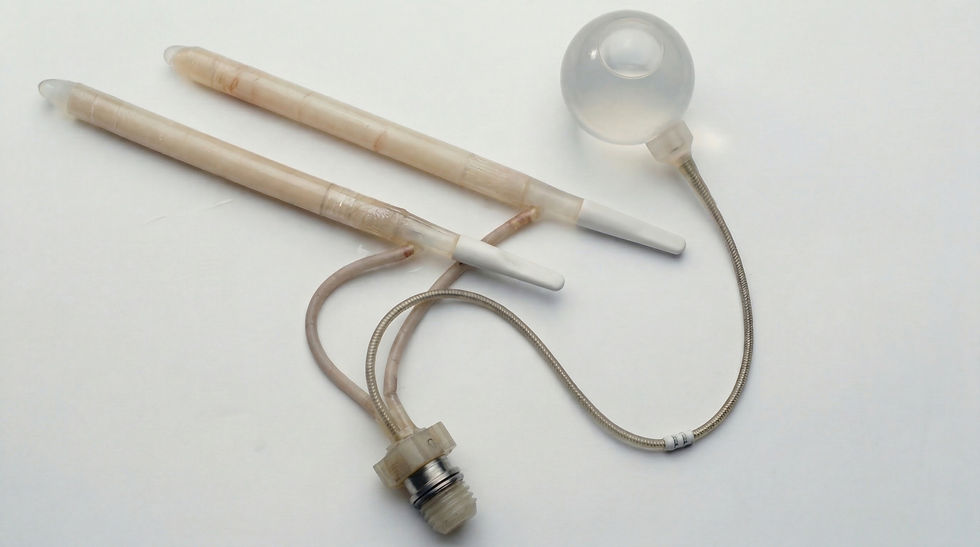
How penile implant surgery is performed and what recovery looks like
Successful penile implant surgery begins before the patient enters the operating room. Blood sugar control, infection screening, medication review, anesthesia planning, and discussion of the selected device all matter. In prosthetic surgery, infection prevention is especially important because a foreign device is being implanted.
The procedure is performed under sterile operating-room conditions, usually with general or regional anesthesia. The exact incision and surgical approach vary according to surgeon preference, patient anatomy, and the type of implant being placed. The corpora cavernosa are prepared, the device is measured carefully, and the implant components are inserted. In inflatable systems, the pump and reservoir are also positioned.
After surgery, patients can expect some pain, swelling, bruising, and tenderness in the early period. These findings are usually manageable and should be explained beforehand. Wound care, hygiene, medication use, and activity restrictions are part of the standard postoperative plan. Inflatable devices are not typically activated immediately because the tissues need time to heal.
Return to sexual activity is not immediate and should not be rushed. Most patients need several weeks of healing, followed by instruction on how to operate the system properly. Patients who want a broader overview of implant options and practical questions can also visit penileimplant.uzclinic.com for additional information. Online information can be helpful, but it should support rather than replace individual medical assessment.
Advantages, limitations, and common misconceptions
One of the major advantages of penile implant surgery is reliability. For men who no longer respond to medication, the ability to achieve predictable rigidity can be extremely valuable. In properly selected patients, satisfaction rates are generally high because the treatment addresses the main mechanical problem directly.
Another advantage is the possibility of restoring sexual spontaneity. Many couples become tired of timing medication, preparing injections, or working around treatment-related anxiety. A penile implant can reduce some of that burden. However, balance is important. Surgery can restore penile rigidity, but it does not by itself cure low desire, communication problems, orgasmic disorders, or broader relationship strain.
The main limitation is that this is a true prosthetic reconstruction. Once an implant is placed, the patient relies on the device for rigidity. This is why counseling must be deliberate and realistic. Another frequent misconception is that penile implant surgery is a penis enlargement procedure. It is not. The goal is functional straightness and firmness for intercourse within the patient’s existing anatomical limits.
Potential risks should also be discussed honestly. Infection remains the most important complication in implant surgery. Mechanical problems, pain, swelling, dissatisfaction, or the need for revision surgery are all possible. Good surgery is not based on exaggerated promises. It is based on careful indication, sound technique, and realistic expectations.
Frequently Asked Questions
Who should consider penile implant surgery?
Penile implant surgery is usually considered for men with erectile dysfunction who do not get adequate benefit from tablets, injections, or other non-surgical methods. It may also be appropriate for selected patients after prostate surgery, in advanced diabetes-related erectile dysfunction, or in severe Peyronie’s disease with rigidity loss.
Does penile implant surgery increase sexual desire?
No. The surgery is designed to restore functional rigidity, not libido. Sexual desire depends on hormones, emotional state, relationship factors, and overall health.
Will orgasm and ejaculation still be possible after surgery?
In many men, orgasm and ejaculation remain possible if those functions were preserved before surgery. However, prior prostate surgery, neurological disease, or other sexual dysfunctions may influence the result.
Is the implant visible from the outside?
That depends partly on the device type. Inflatable implants usually provide a more natural appearance in the resting state, while malleable implants may be somewhat easier to notice depending on body habitus and clothing.
How long does recovery take?
Early healing takes several weeks, and sexual activity is usually postponed until the surgeon confirms that healing is adequate. Inflatable implants also require postoperative teaching before regular use.
Is penile implant surgery a permanent cure?
It is better understood as a durable prosthetic solution rather than a cure in the abstract. The device is intended for long-term use, but like any implantable mechanical system, it may eventually require revision or replacement.
Medical notice: This article was prepared by Op. Dr. Niyazi Umut Ozdemir for medical information purposes only. It does not replace individualized medical advice, diagnosis, or treatment planning. Patients should consult a qualified specialist physician before making any decision about treatment options, including penile implant surgery.


Comments